


Jamun Seed Powder vs Fruit Powder | Hennahub
Jamun Seed Powder vs Jamun Fruit Powder – Differences, Uses & Buying Guide
Jamun seed powder vs Jamun fruit powder: choose by plant part, not by the word Jamun alone. Both can originate from Syzygium cumini, but they serve different ingredient needs. Hennahub sells the seed format, not the fruit powder described in this comparison.
Seed powder
Ground dried seeds. Typically earthy, tan to brown and particulate. Select when your ingredient requirement specifically calls for Jamun beej.
Fruit powder
Usually dried pulp or declared fruit material. Often fruit-forward in flavour and purple-toned. Select for a fruit-based formulation.
Published by Hennahub, seller of Jamun seed powder. This is an ingredient guide, not independent product testing.
Same fruit tree, different ingredients
Jamun, also called Indian blackberry or Java plum, has a dark fruit exterior, juicy pulp and a seed inside. When a supplier dries and mills the separated seed, the resulting powder is a seed ingredient. Drying the pulp produces a different material. Whole-fruit preparations and blends can also be sold under the broad name Jamun powder.
The search phrase Jamun beej powder vs Jamun powder therefore needs a precise answer: beej identifies the seed, but Jamun powder alone does not identify the plant part. A buyer should not rely on a purple fruit illustration to decide what is in the pouch. The ingredient declaration is the starting point.
Hennahub's retail listing describes sun-dried Syzygium cumini seed powder in a 100g food-grade pack. It is intended for shoppers seeking the seed material. If your recipe depends on the characteristic fruit flavour or purple colour, check for a pulp product instead.
Seed powder and fruit powder at a glance
The following characteristics are typical, not guaranteed batch specifications. Scroll the table horizontally on a small screen.
| Feature | Seed powder | Fruit powder |
|---|---|---|
| Plant part | Dried seeds or seed kernels | Usually pulp, sometimes skin or whole fruit; verify label |
| Typical colour | Beige, tan or brown; variable | Pink, red-purple or muted purple; variable |
| Taste | Earthy, often astringent | Fruit-like, sweet-tart; carrier ingredients can affect taste |
| Texture | Ground particles may remain suspended or settle | Depends on drying method and carriers; not always fully soluble |
| Processing | Separate seeds, dry and mill | Separate pulp, then dry; spray drying may use drying aids |
| Ingredient label | Syzygium cumini seed powder | Jamun pulp/fruit powder; check added ingredients |
| Selection goal | Seed-specific botanical ingredient | Fruit flavour and colour in a suitable food formulation |
| Quality checks | Species, plant part, moisture, hygiene, batch | Fruit solids, carriers, colour stability, batch |
Why colour and taste differ
From seed to milled powder
Seed processing starts with identifying and separating the required plant part. Drying reduces moisture before grinding; screening may help control particle size. Ask whether the material includes the entire seed or only the kernel if this matters to your formulation. Grinding does not make the ingredient a purified extract.
From fruit pulp to powder
Pulp generally contains more moisture before drying. Spray-drying or other dehydration methods can produce different textures and flavour profiles. Published food-processing research has used maltodextrin as a drying aid in Jamun pulp powder. This is why a fruit powder may contain more than fruit solids.
Research comparing Jamun pulp and seed samples found different phenolic profiles, including fruit pigments in the pulp and differences in seed tannin-related compounds. These observations explain why the two plant parts should be treated separately; they are not test results for Hennahub products and do not establish clinical benefits.
Colour is influenced by the starting material, drying and storage. A brown seed powder is not necessarily inferior to purple fruit powder. Likewise, intense purple colour is not proof of fruit purity. Ask for the ingredient declaration and, for commercial purchases, batch documentation.
What should pure Jamun seed powder ingredients look like?
These illustrative declarations show why similar product names can describe different purchases. They are not transcriptions of competitor labels.
Single ingredient seed
Example: Jamun seed powder (Syzygium cumini).
Check the seed identity, weight, batch, date and intended use. Choose this type when you need Indian blackberry seed powder rather than fruit flavour.
Fruit-based formulation
Example: Jamun fruit pulp powder, maltodextrin.
Check the actual fruit-solids content where declared, carrier ingredients and recommended application. A drying aid does not automatically mean poor quality, but it changes the composition.
Five checks before adding a product to your cart
- Read the botanical name and plant part.
- Check whether any carriers, flavours or sugars are declared.
- Compare net weight and price only between similar product formats.
- Confirm the intended use and the label's preparation directions.
- Check batch identification, storage and seller information.
Jamun gutli powder uses versus fruit-based preparations
Botanical mixes
Seed powder can be selected where a recipe specifically requires ground Jamun seeds. Use a product intended for food and follow its label. The powder may add an earthy character and visible particles, so evaluate the texture rather than expecting a smooth juice.
Fruit beverages and desserts
A suitable pulp powder may be preferable when the goal is a recognisable fruit taste or purple appearance. Review the supplier's preparation instructions, because dried fruit powder may contain carriers and may change colour during preparation.
Small-batch food development
Record the ingredient format before testing. Compare small pilot batches under the same conditions, note sediment, flavour and appearance, and review legal suitability for the intended food category before commercial sale.
Buying for regular use
Choose a quantity that fits your needs and the labelled storage period. Avoid transferring the powder into a damp container. Use a dry spoon and keep the original batch information so the pack remains traceable.
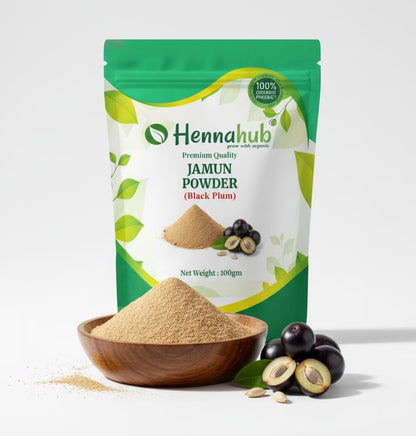
Hennahub Jamun Seed Powder (Food Grade) 100gm Pack
Choose this product if you are specifically looking for ground Jamun seeds rather than dried fruit pulp. The seller describes it as a single botanical ingredient made from dried seeds. Check the live product listing for current pack information, price, stock and directions.
Open official product pageThe direct shopping link remains available if the embedded purchase widget cannot load.
Buying Jamun seed powder for a business?
Wholesalers, distributors, food ingredient buyers and private-label brands should specify the plant part, quantity, particle size, packing and destination before requesting a quotation. Ask for the current batch specification and relevant quality documents. A retail pouch is not a substitute for an agreed bulk specification.
Visit Hennahub India or Hennahub.com for business sourcing information.
Request bulk quotation on WhatsAppJamun seed powder vs Jamun fruit powder: buyer FAQs
Is Jamun seed powder the same as Jamun fruit powder?
No. Seed powder is made from the seed, while fruit powder generally uses fruit pulp or other declared fruit parts. They are not automatically interchangeable.
What is Jamun beej powder?
Beej means seed. Look for Syzygium cumini seed powder on the actual ingredient declaration.
What is Jamun gutli powder?
Gutli or guthli is a common Hindi term for the seed or stone. Check whether the seller specifies whole seed or kernel.
Is Indian blackberry seed powder the same as Jamun seed powder?
Indian blackberry is one common name for Jamun. Verify Syzygium cumini because common names can vary.
Why is fruit powder often purple?
Pigments called anthocyanins contribute to fruit colour. Processing, pH and storage affect the final shade.
Why is seed powder brown?
The seed has a different composition from the purple fruit pulp. Drying and milling can also affect its colour.
Which powder tastes more like fresh Jamun?
A pulp-based product is generally the closer choice for fruit flavour. Check processing and additional ingredients.
Does seed powder completely dissolve?
Ground botanical particles may remain suspended or settle. It is not necessarily a soluble extract.
Does fruit powder contain added ingredients?
Some products contain carriers such as maltodextrin. Others may not. Read the full ingredients list.
Can I substitute seed powder for fruit powder in recipes?
Not automatically. They differ in flavour, colour and texture. Follow the intended recipe and product directions.
What are pure Jamun seed powder ingredients?
A single-ingredient product should declare Jamun seed powder alone. Verify the actual pack and supporting documentation if needed.
What does Hennahub sell?
Hennahub offers a 100g food-grade Jamun seed powder, described by the store as dried Syzygium cumini seeds.
Does food grade mean it is a medicine?
No. A food product should not be used to treat disease or replace prescribed medicines.
How should I store Jamun powder?
Follow the label, keep the pack sealed and dry, and avoid introducing moisture with a wet spoon.
Where can I buy Hennahub Jamun seed powder?
Use the official HennahubStore product link or the View product button on this page. Check the live price and stock.
Can businesses request bulk seed powder?
Contact Hennahub India with the intended application, destination, quantity and required batch specification.
References and editorial disclosure
This comparison uses published ingredient research and Hennahub's own product description. It does not claim independent batch analysis, a tested national ranking or a health advantage for either format.
- Hennahub official Jamun seed powder listing
- Published comparison of Jamun pulp and seed phenolic composition
- Research on spray-dried Jamun pulp powder and drying aids